
Blackbox Gambling and the Age of AI Slop


I’m writing this in June 2026, so the moment I hit “publish,” this info will probably already be outdated.
Intro
What is AI?
I first encountered AI through gaming. As a game dev, you give an enemy "artificial intelligence" so they seem to move independently. But really, it’s just a bunch of hardcoded rules, like: “If player is within 10 meters, move toward player.”
Later, the term shifted more toward neural networks. Minecraft legend “SethBling” once had a neural network play Super Mario, which is a case where "Machine Learning" is the much more accurate term.
That said, if someone is talking about AI today, they are 99.99% referring to an LLM. I will be using the term “LLM” as much as possible throughout the rest of this text, but if I talk about AI, I also refer to LLMs or generative AI.
What is an LLM?
I won't go into much detail and I’m going to simplify things a lot - plus there are many different “flavors.” An LLM is created by taking a massive pile of human-written text, collected from the internet (mostly illegally via scraping), and converting it into numbers. This is called “tokenization” (the converting part, not the data theft part).
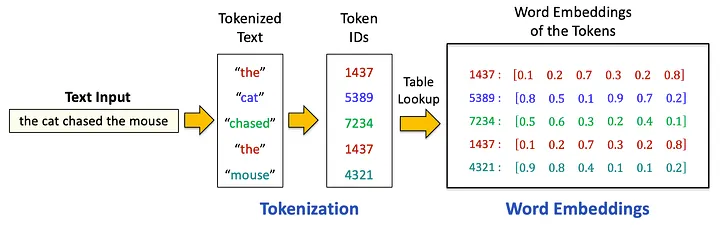
For example, “I like pizza” becomes “11, 47, 523” (it doesn't actually, this is just an illustration).
You then feed these sequences of numbers as vectors through a neural network that, using a lot of statistics and other math, gets better and better at calculating the probability of which number follows another.
The trained neural network is essentially just a list of parameters - meaning numbers - used to perform these calculations. Roughly speaking, the more parameters an LLM has, the more topics it can plausibly calculate.
So, if I ask the neural network, “I have ‘I’ = 11 and ‘like’ = 47, what comes next?”, it takes the numbers, does some math, and concludes that “pizza” = 523 is quite likely, but it could just as easily be 393 = “cats” or 6322 = “dogs.”
Plausibility ≠ Intelligence
In my opinion, this is something you should always keep in mind when working with LLMs.
An LLM doesn't think; it doesn't know what is right or wrong. It just generates plausible, statistically likely results - whether those are objectively "correct" is just a coincidence.
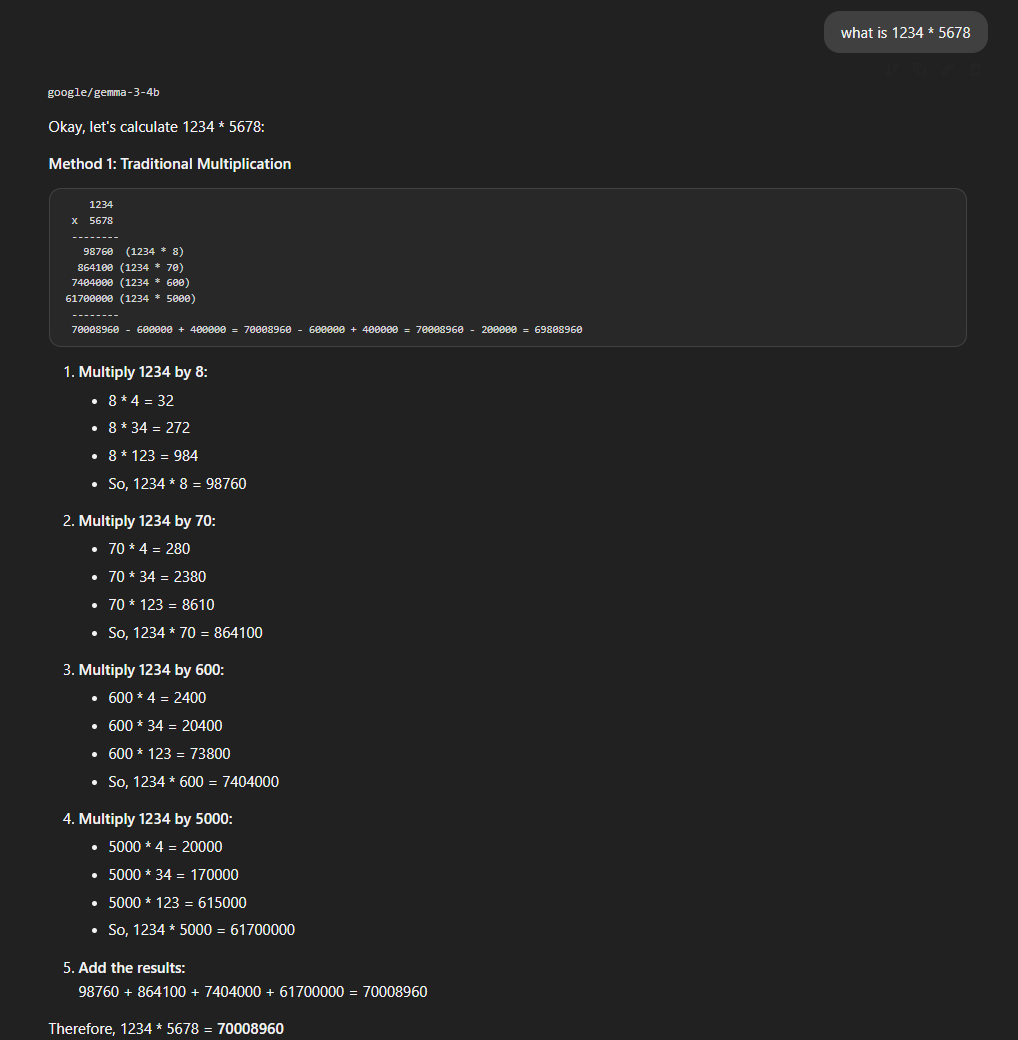
An LLM, for example, cannot actually do math on its own (without extra tools). It can't "calculate" 1 + 1; it can only estimate, based on the training data it has seen, that there is a very high probability that the characters " = 2" will follow the characters "1 + 1".
Granted, the tech has evolved. We now have "reasoning models" that break math problems down into step-by-step internal logic chains before answering. But don't confuse a simulated chain of thought with genuine comprehension. Even when executing these logical steps, the AI is still just generating statistically plausible text paths. It doesn't understand numbers; it just executes a highly sophisticated imitation of human logic. If a single variable in that invisible chain of thought skews slightly off-course, the entire calculation confidently collapses into nonsense.
This behavior is unfortunately misinterpreted as intelligence far too often and is taken at face value.
We only call it a "hallucination" when a result is obviously implausible. But in my opinion, 100% of all LLM results are actually hallucinations.
As an exaggerated example, a small local model like gemma-3-4b fails to calculate 1234 x 5678 = 7.006.652 and confidently states 70.008.960 is the correct answer:
Blackbox Gambling
LLMs have undermined the one thing computers were actually good at: deterministic, predictable results.
This also makes it incredibly hard to track down errors. Because, basically, you have no idea what is happening internally or how it reached a specific result.
When an LLM doesn't do what I want - like if it suddenly starts making grammatical errors in German sentences - that's when what I call “blackbox gambling” begins. I tweak the prompt on a whim, like “ensure grammatically correct sentences”, maybe play around with parameters like “temperature”, throw more text at it and just hope for the best.
And if that doesn't work, I just try it again. What other choice do I have?
Just like an idiot at a slot machine: "The jackpot is coming on the next pull, for sure..."

The Domain Knowledge Trap
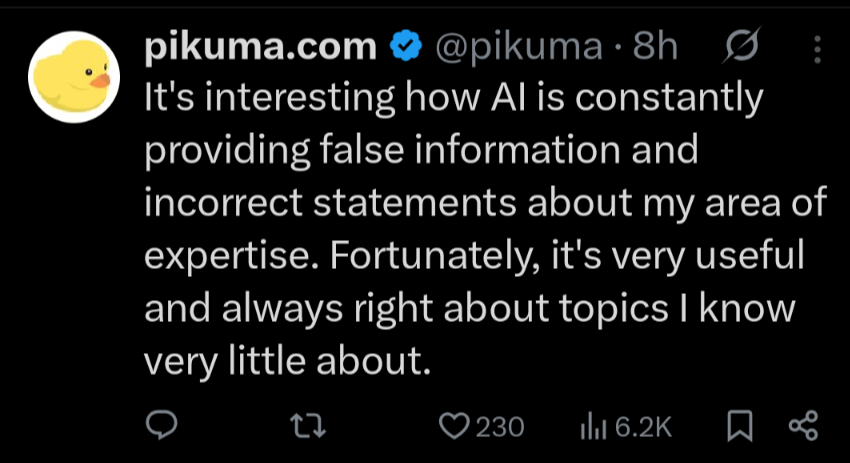
The real danger with LLMs becomes obvious when you ask them about a topic you actually know well - compared to a topic you don't know at all.
I once asked an LLM a question about German tax law. To me, as a layman, the answer looked totally plausible and correct. But when I went to a professional to discuss what I’d learned, they just looked at me confused and said, “That’s complete nonsense.” I had fallen straight for a hallucination.
We’ve always had that saying, “Just because it’s on the internet doesn't mean it’s true,” but with LLMs, it seems like almost nobody questions them because the conversation feels so "human."
When I use an LLM for programming, I can easily tell if the result is actually useful. I see the absolute garbage it spits out all the time, which makes me doubt all those times I asked it questions about topics I don't actually know.
Resources, resources, resources
As I mentioned before, getting an LLM to generate text requires a massive amount of computation. The math itself isn't even that complex; it’s just that there is so much of it.
GPUs happen to be perfect for this. They were originally designed to handle the heavy lifting in video games - crunching massive amounts of 3D coordinates into 2D pixels on your screen as fast as possible.
But here’s the catch: the best and most popular LLMs have so many parameters that you simply can't run them on a normal computer. They have to live in a data center.
And it’s not just about running them - you need those massive data centers just to train the models in the first place. We're talking a ridiculous amount of GPUs, electricity, cooling water, and physical space.
It’s hard to put a precise number on it, but let me put it this way: it is definitely not "eco-friendly." It honestly blows my mind that, given the current global crises we're facing, we've decided that AI is exactly what humanity needs right now.

The Bubble
You hear this enough, so I'll touch on it - though I’m no economics expert, so take this as a very unqualified take:
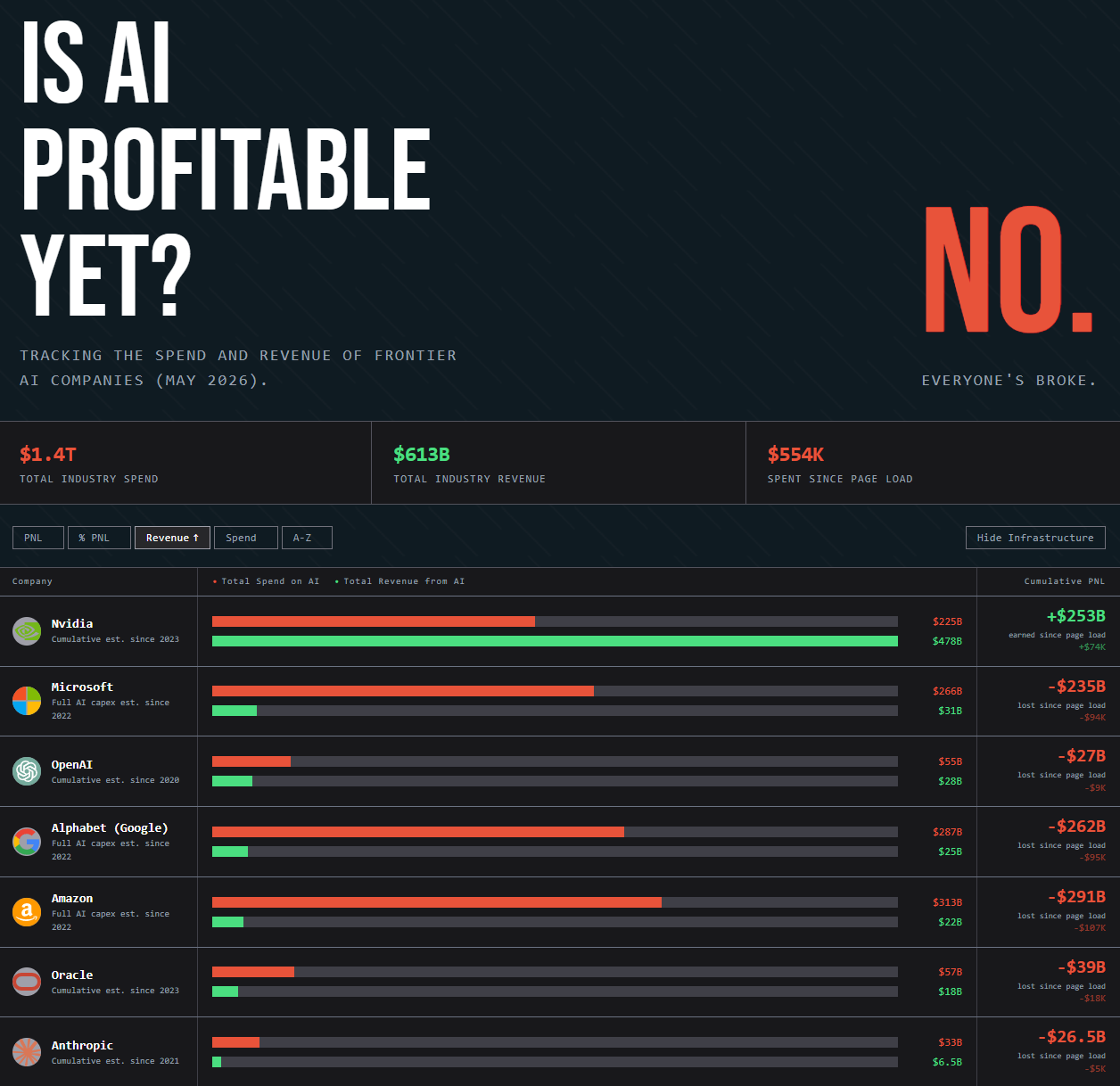
It’s obviously much more complex than this, but basically, Big Tech has collectively agreed that AI is the next big thing and that there's a mountain of money to be made. This has led to massive speculation in the stock market, following a pattern very similar to the dot-com bubble. Nowadays, anyone doing "something with AI" gets money shoved down their throat, just like back when anyone with "something to do with the internet" was getting a blank check.
People are investing like crazy based on pure hype, even though actual profits haven't really shown up yet. It’s basically a giant circle:
- Nvidia invests massive amounts in OpenAI because AI is "huge" and will be incredibly profitable.
- OpenAI hires Oracle to build massive data centers.
- Oracle takes that cash and buys GPUs from Nvidia.
- Other companies invest in Oracle because they're obviously going to make a killing.
If the profit doesn't actually materialize, the whole thing doesn't add up - and Nvidia is the only real winner. From the outside, it looks like the entire US economy consists of about seven companies passing trillions of dollars back and forth.
Because of this perceived "inevitability" of the tech, AI is being forced into everything simply because a handful of billionaires decided this is the future.
Local LLMs
Local LLMs are smaller models that you can run on, say, standard gaming hardware. I think they’re actually quite good for a few reasons:
- Cost: I already own a GPU, so I don't have to spend extra money.
- Freedom: I can use my GPU as much as I want.
- Value: My GPU gets extra utility, which makes the money I spent on it feel more worth it.
- Environment: I'm not hurting anyone - I'm not using massive amounts of electricity and water, just some short bursts of power. (Of course the model must be trained by someone, which consumes a lot of energy) I am not adding to the scarcity of consumer hardware.
- Privacy: My data stays with me, which is a massive win for privacy.
- Ownership: No one can take it away from me.
That said, local AI is limited by its capabilities. A normal consumer graphics card only has about 16–24 GB of VRAM. You can run some pretty capable models (like Gemma 4 26B or Qwen 27B), but often with a very small context window or high quantization.
They are obviously not as powerful as the "big players" like Google, OpenAI, or Anthropic. They can be a bit slow or not detailed enough for certain tasks, but they are more than sufficient for others.
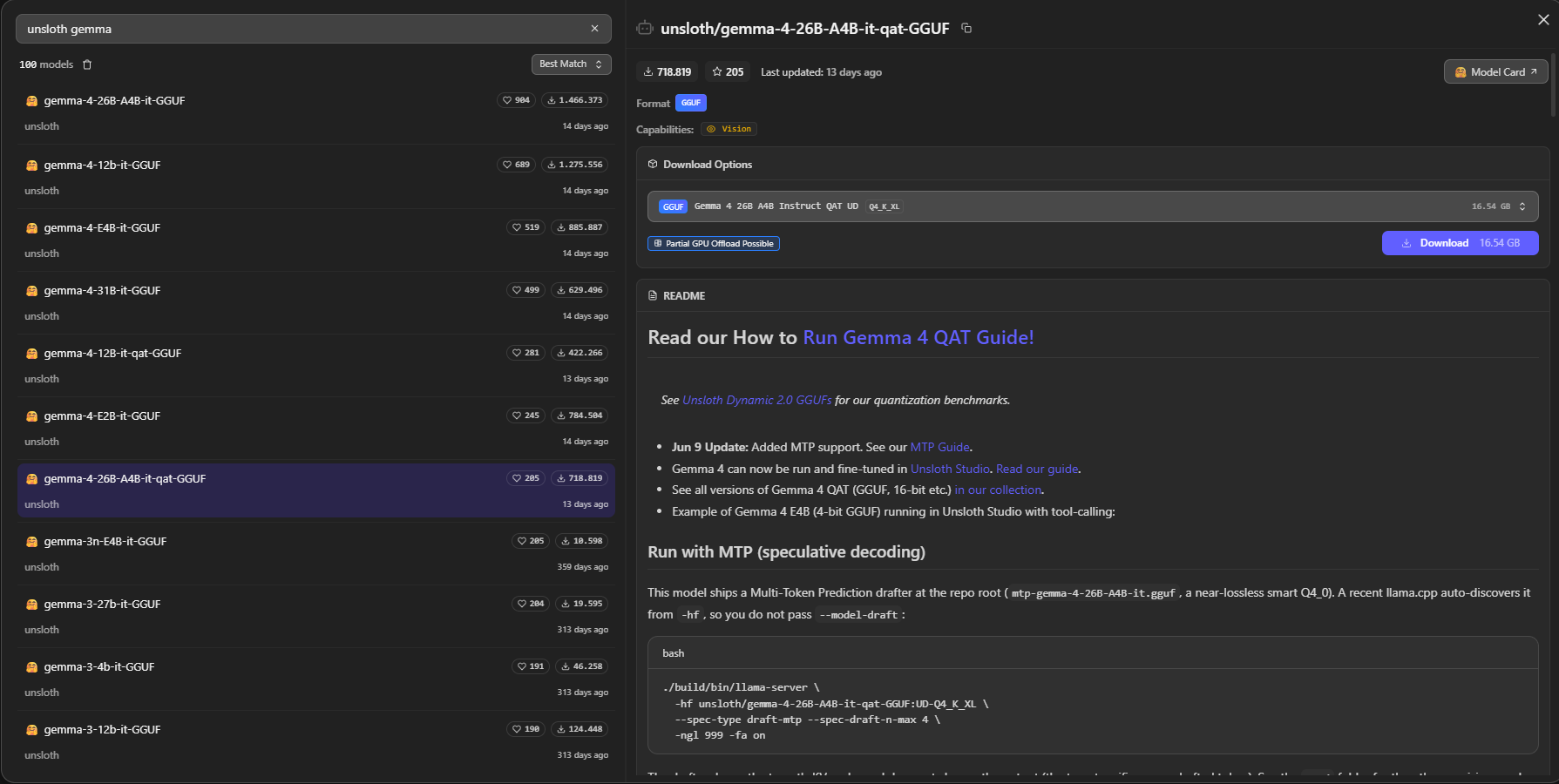
How I use local LLMs
- Automatically naming scanned documents
- High success rate for good results.
- It's hard to mess this up.
- I definitely don't want to send my private bank statements to Google or OpenAI.
- It saves me time and makes the whole process of digitizing my stuff much less of a chore.
- Generating code snippets
- For small, standalone bits, an LLM is actually very useful and fast
- Example: "Give me a quick JS snippet for a function that sorts an array of objects by the key 'x'."
- Spelling and phrasing help in English (like in this blog post!)
- English isn't my native language.
- Since LLMs are trained on so much text, they’re actually pretty good at checking grammar as long as they don't try to change the meaning of what I've written.
- Generating code in languages I don't know yet
- I learn best by reading code that addresses my current problem.
- Since I already know how to program, I can usually tell if the AI is bullshitting me, even if I don't know the specific syntax perfectly yet.
AI and Art
In 1996, IBM Deep Blue beats Garri Kasparov in a chess match. You might think that would lead people to stop playing chess entirely, simply because computers play a much better, more aggressive, and more experimental game. But it turns out we don't watch chess primarily because of the moves, we watch it because of the humans involved.
I’ve always found it hard to distinguish "art" from "non-art." But now that we have AI - something that is so obviously not art - it has suddenly become much easier to tell the difference.
A Paradigm Shift
Paradigms - our mental "templates" for evaluating the world - need to be updated constantly to match current reality.
Take oil paintings, for example. They require aesthetic skill, craftsmanship, and immense patience. Subjects had to sit still for hours, and artists had to practice for years to master the medium. An oil painting is a work where the medium itself underscores the importance of the subject. You can almost look at a portrait and think, "If they went to all this trouble to make an oil painting of this king, he must have been important."

For an AI, generating an oil painting requires almost zero effort. If we update our paradigms, an AI-generated "oil painting" shouldn't impress us more than any other AI image, because we know it lacks that inherent weight and struggle.
Trying to amaze people with AI-generated oil paintings - or worse, expecting your audience to be impressed just because you used a "classic" style - is a logical fallacy.
Effortless Excellence
In an informed society, "effortless excellence" cannot exist.
If I only have to flick a finger to trigger a process that results in a product the masses cheer for, that is effortless excellence. Once society realizes that the end result required no real struggle, they change their standards. They recognize the intrinsic effortlessness of the process and, consequently, value the product accordingly: as something worthless.
When green screens were first used in movies, they were mind-blowing. Now, every smartphone can separate a subject from its background effortlessly.
We have to stop looking at the works of the present through the eyes of the past.
Client vs. Creator
People often defend AI by saying it’s "just a tool," like Photoshop or a digital drawing tablet. But there is a massive difference: generative AI doesn't make the human a better creator.
A tool is something mastered by a human to realize an idea. Tools are ultimately driven by people. Generative AI is different. It’s not a tool, it’s an execution automaton.
The person telling the AI what to generate isn't the creator of the work, they are the client. It’s a lot like Fiverr. You go to a site, type what you want in a chat interface, and a little while later, you get a result. No one who is being honest would take a result from Fiverr and walk around proudly saying, "Look at what I made!"
Some might argue "it doesn't matter," but I disagree. It matters immensely when we know who the author is. Finding out that a cute video of a rabbit on a trampoline is AI-generated? That’s a disappointment. That disappointment is becoming so universal that people are finding it increasingly hard to openly admit their content is AI-generated.
Aesthetic Responsibility
When an artist intentionally makes something "bad" or "dilettante", it is still qualitatively different from something that was unintentionally bad.
Whether a work is brilliant or weak is determined by whether its qualities arose by chance or were brought about by the author in the right way. This 'right way' can be described as aesthetic responsibility. The artist is not only causally responsible for the result of the work, just as an avalanche is responsible for the destruction of a village.
- Künstliche Intelligenz: Das Ende der Kunst? - Catrin Misselhorn, Reclam (2025)
An artist is responsible for the decisions made during the creation. Because a human can make conscious choices about composition, emotion, and form, those choices gain meaning.
Using an execution automaton is the exact opposite of aesthetic responsibility. You are literally offloading the responsibility - that’s the whole point. You aren't just "not the creator", the output can never be a qualitative work of art.
Humans tend to project intention and "aesthetic responsibility" onto AI anyway - the Eliza Effect - but that doesn't change what the process actually is.
The "Democratization" of Art
Using generative AI is the best way to ensure you never actually learn the skills required for the medium.
Some people argue, "I just don't have the talent, so now I can finally do it." But the truth is, they still can't do it. They just have a machine that provides a convincing imitation.
"Talent" is often just a word for the work and effort someone has put in. No one says, "I'm not talented at Portuguese", they say, "I never learned Portuguese."
Art has been democratized for a long time. Anyone with an internet connection can learn through apps, tutorials, and forums. There have never been fewer excuses not to be creative, yet there have never been fewer arguments for using generative AI.
Economics
So why outsource your own creativity to an automaton? Is your idea so worthless that you don't want to give it shape yourself? Is using AI proof that you don't believe in your own vision?
The answer is simpler: it’s cheaper and faster.
The mindset of influencers, TV networks, and big brands is that it’s enough to present cheap imitations to their audience. They are convinced that people will applaud anyway.
They think: "Well, for them, it's enough."

Vibe Coding
First, I need to clear something up: to me, "Vibe Coding" means handing over a massive chunk of the responsibility to an AI and essentially developing via a "black box." You just chat with the AI over and over until it finally gives you what you were looking for.
The easiest way to describe it is like this: instead of programming the app myself, I go to Fiverr, give some guy 5€, and say, "Make me a website about cats." Vibe Coding is basically that, except instead of giving my money to a freelancer, I'm feeding it to a massive corporation that’s accelerating the climate crisis with their giant data centers - but I digress.
On the other hand, you have "AI-assisted programming." This is like sending that same cat website to the guy on Fiverr and saying, "Hey, I started building this image gallery, but the slider isn't working."
In this second case, you might say I’m still taking "aesthetic responsibility" for the result. I check the AI's code before I accept it, or I only use the AI for uncritical, repetitive tasks.
Of course, there isn't a hard line between the two, it's a spectrum. If I let the AI develop an entire image gallery, but then I review the code, approve it, and merge it without changes - have I actually kept that responsibility, or have I given it up?
Intention
In my opinion, it all comes down to intention.
If you want to program because:
- It’s fun to solve problems
- You want to create something yourself
- You want to realize a personal vision
- You want to get better at the craft
Then I think you’re moving into the realm of "art."
Programming is creative, especially when you do it as a hobby for self-expression. Why would I pay a guy on Fiverr 5€ to do my hobby for me? It’s like paying someone to finish a video game for me while I'm in the middle of enjoying it.
When my intention is art, I imagine myself standing before a canvas, creating a painting that has value - regardless of how it looks - simply because there is intention and humanity behind it.
If someone shows me a painting that just came straight out of a printer, the result might be faster, cheaper, and even "better," but from an artistic perspective, it’s worthless because of that "effortless excellence." Even if you pay an artist to paint something, saying "Yeah, looks good, I could have painted that too" doesn't magically inject intention or humanity into the work.
If someone is honest and says, "I want to get to the result in the laziest way possible, I don't care how I get there, this isn't art," then fine.
The Assessment
But when someone approaches me with the pride of a creator, yet presents a result where no actual creative process took place, I feel disappointed.
The worst part for me is when I know someone can actually program, but they suddenly start using AI as a shortcut for everything. I run into this constantly - personally, at work, and in Open Source projects.
When I encounter a project like that, I’m immediately overwhelmed because I don't know how to feel. I don't know how often, in what form, or to what extent the AI was used.
Where was the aesthetic responsibility?
Was the AI just helping with the documentation? Cool.
Were the core concepts invented and implemented by the AI? That's lame.
It makes it impossible to give an informed critique.
If you serve me a frozen pizza but pretend you're a Michelin-star chef, I feel cheated - no matter how good it tastes. It’s the same feeling as when someone hides the fact that they're using AI because "it's just a tool," and then you find out later.
It's the same level of disappointment I felt when I realized the "freshly fried" eggs at a hotel are sometimes actually just thawed-out frozen eggs. Yeah, it's cheaper, faster, and more consistent - but god, it's depressing.

Code Quality
At the end of the day, Vibe Coding is just blackboxing, and the generated code is often a mess. LLMs aren't great at planning proper architecture or keeping the "big picture" in mind.
They are great at "slapping" code together to meet a specific requirement. And that’s exactly what a Vibe Coding project looks like: a disorganized pile of code with security holes everywhere.
It might look beautiful in the browser - AI is amazing at spitting out hundreds of lines of HTML and Tailwind styling. It might even work - the user isn't going to notice that every API endpoint is implemented in a completely different way.
That's why, when using an LLM, you need strict guidelines and a massive context. You have to define code style rules, you have to ensure the code is flexible enough for future updates, and you have to be able to judge whether the generated output actually follows those rules.
In short: you actually have to know how to program to use these tools properly.
Why should I even care?
How AI is killing gaming and home labs as a hobby
To play on a PC or run a home lab, you need hardware. But lately, you either have to pay "moon prices" or you simply can't find anything at all.
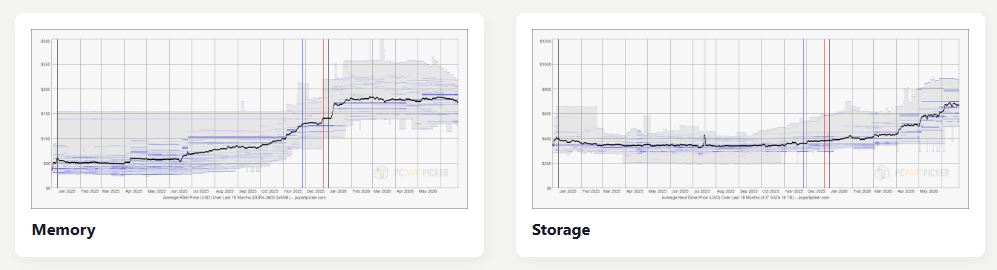
Why? Because manufacturers have realized, in their collective capitalist gold-rush mode, that they make way higher margins selling to server customers than to regular people like us.
Memory and GPU manufacturers are scaling down their consumer-grade production to focus on business clients. Some are even ditching the consumer market entirely.

At the same time, people who want to stay independent from the big AI tech giants are buying up piles of second-hand GPUs just to build mini-LLM data centers in their bedrooms. This leaves gamers - the people these GPUs were actually designed for - with almost no chance of buying hardware at a reasonable price.
The endgame?
If this keeps going, we're heading toward a future where nobody can actually own a high-performance PC because they simply can't afford one. You'll be forced into vendor-locked consoles or, even worse, strictly cloud gaming.
We’re already halfway there when it comes to digital game licenses. No one releases physical games anymore - the kind that you actually own and that are guaranteed to still work in 30 years.
"You will own nothing and you will be happy."
AI didn't invent this problem, but it is definitely acting as an accelerator.
AI is killing hobby subreddits I like to read
I used to love reading r/selfhosting and r/sideproject. People would share personal projects that clearly had a ton of heart, work, and thought put into them. You could actually see the "love" in the code.
Lately, though, it’s just been a flood of "I was tired of X, so I built X" posts. Usually, it's someone presenting an app they vibecoded in two hours using AI, reddit post written with AI-generated text, and then they reply to every single comment with more AI-generated text.
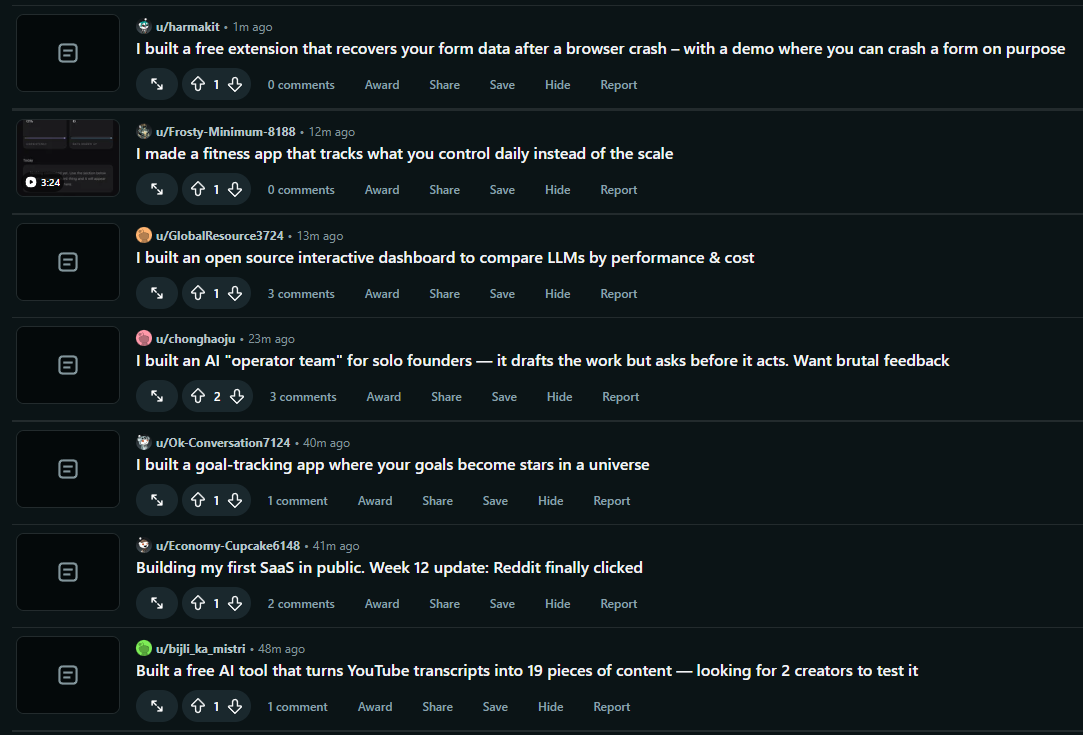
It’s just soulless AI slop. The apps are low-quality, stay low-quality, and stop getting updates the second the creator loses interest.
Why do they lose interest so fast? Because from the start, the goal wasn't to solve a problem - it was just to get attention on Reddit and/or sell a product. That genuine, intrinsic motivation to actually dig into a problem and build something maintainable for a community or for fun? You hardly see it in these subreddits anymore.
And people celebrate it! They're allowed to. But the moment you actually try to use one of these projects and find a bug or want a feature, nothing happens. Either the author has already moved on to pumping out the next piece of AI slop, or they try to use AI to "fix" the requirement, meaning they don't even actually understand how their own app works.
I’m not saying people who can't code shouldn't use AI to build something. A few years ago, I wouldn't have judged someone for paying a guy on Fiverr to do it for them.
But it is incredibly annoying when someone pays a guy on Fiverr 5€ for a low-quality website and then shouts, “Look at this amazing thing I made!” when the only work they actually did was sending a prompt in a chat. I think the analogy is pretty clear.
So: Use AI, make your stuff, but keep it to yourself. Don't make the rest of the world deal with it.
I should note, though, that (at least it feels that way to me) a paradigm shift is happening. These low-quality posts are getting more and more backlash, and some subreddits are even limiting vibecoding posts to one specific day of the week. The divide online is definitely growing though.
AI is ruining Open Source for everyone
The entire internet runs on Open Source. Most people don't even realize it. About 96% of all commercial software uses open-source building blocks, but a lot of it is provided for free, maintained by... well, usually just one guy working for nothing
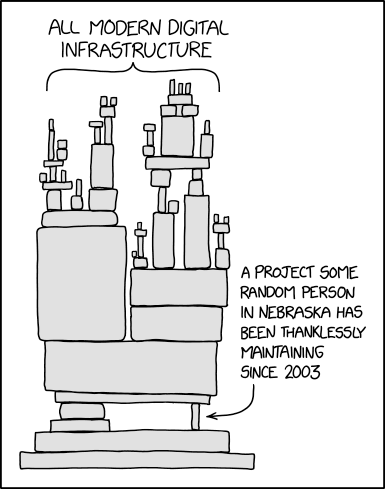
Normally, the whole thing is a beautiful, self-reinforcing cycle:
- Someone writes some code.
- Others use it.
- This saves everyone time, so devs can put their energy into new things instead of reinventing the wheel.
- That leads to more code being written.
But AI is breaking that cycle.
The Visibility Crisis
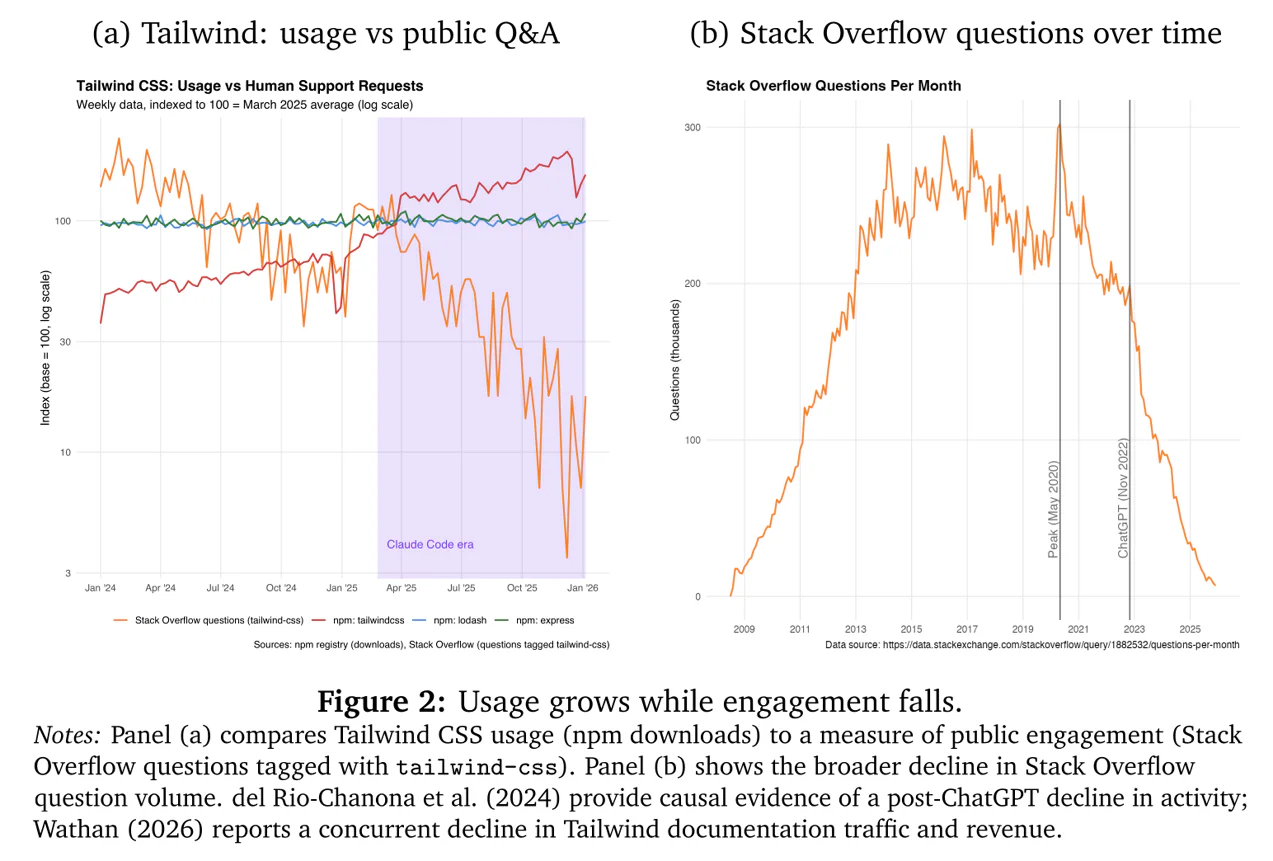
Take Tailwind CSS as an example. In the last three years, its usage has jumped by 60%. But during that same time, traffic to their documentation has dropped by 40%. Because the revenue from ads on those docs is what actually pays the developers to maintain the project, they are losing money while their usage goes up.
People aren't interacting with Tailwind as a project anymore; they’re just asking an AI to generate the code for them. This destroys a dev's visibility. And for many, visibility is how they survive - it’s what leads to speaking engagements, book deals, or better job offers.
The Maintenance Burden
AI basically scrapes all the information and knowledge, but the human developer still has to deal with the actual work. They still have to host the documentation, manage the servers, answer emails, review Pull Requests, and handle all the legal requirements.
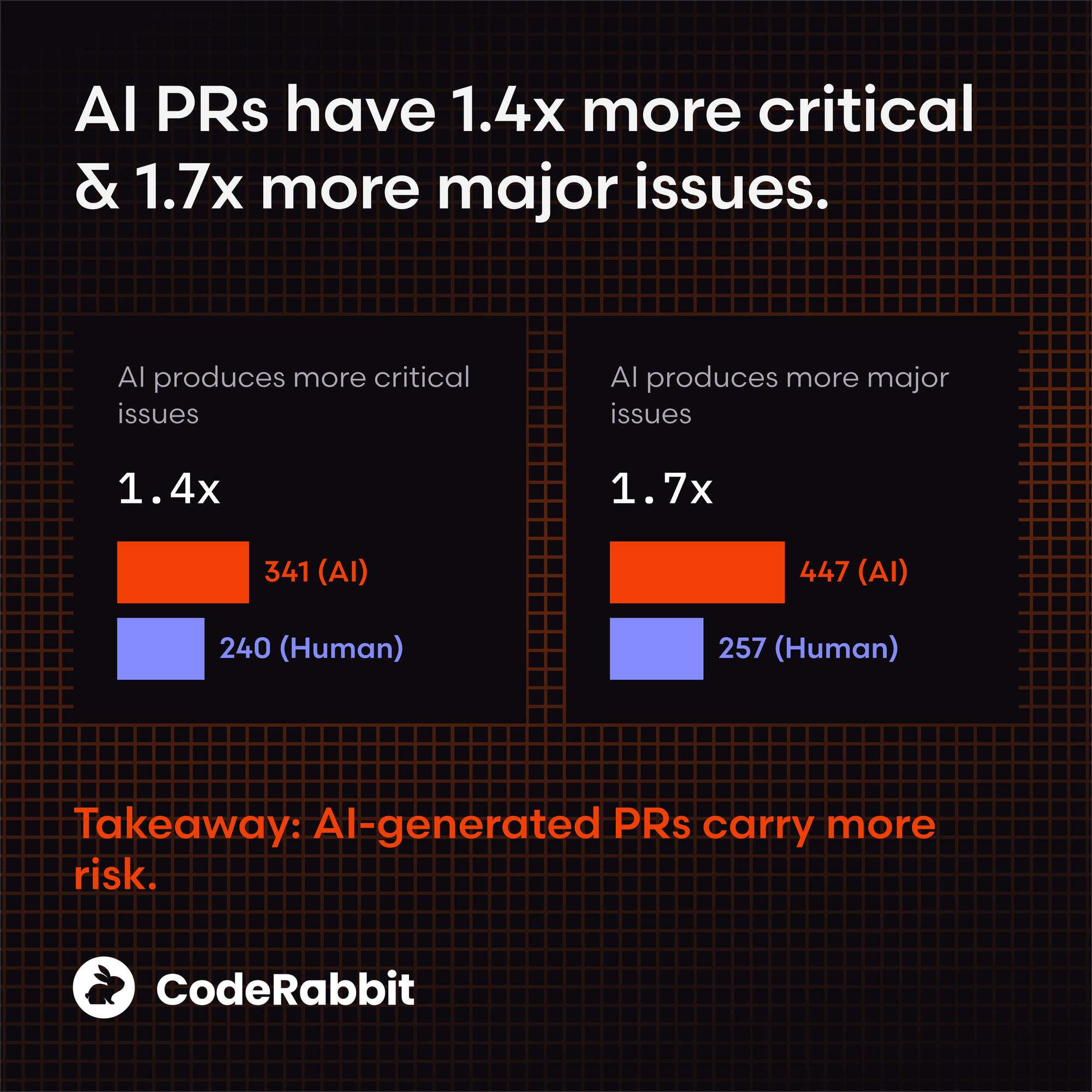
The "slop" is real, too. Look at cURL - a massive, essential tool. They had to shut down their bug bounty program because less than 5% of the reports were actual security vulnerabilities. The rest was just AI-generated "slop" - hallucinated bugs that the maintainer still had to spend time reading and evaluating, just in case it was actually a real vulnerability.
The math just doesn't add up for maintainers: generating code is fast and cheap, but reviewing it is slow and expensive. It's a terrible deal.
Transparency vs. Exposure
This is reflected in the stats: 45% of maintainers say AI is affecting them negatively, and 64% say they are less willing to even look at a Pull Request if they know it was generated by AI.
We’re also seeing a strange shift in security. Open Source is traditionally considered more secure because "many eyes" means bugs get found quickly. But look at cal.com. They actually went closed source recently for security reasons.
The reason? AI is too fast. It can find vulnerabilities much faster than human developers can patch them. In this new landscape, "transparency becomes exposure." Whether that's the right move is up for debate, but the reality is that Open Source is being pushed toward being Closed Source because of AI.
The "AI vs. AI" Fallacy
I know what some of you are thinking: "Fine, then we’ll just replace the maintainers with AI! We'll use AI to defend ourselves against the AI hackers!"
Honestly? Are you even listening to yourself?
Between platforms like GitHub training their models on our hard work, and the fact that fewer and fewer people are actually learning how to code because they think the AI can do it for them, the foundation is cracking. We're moving toward a future where the people building the tools are being phased out by the very tools they created.
AI is ruining software I need to use
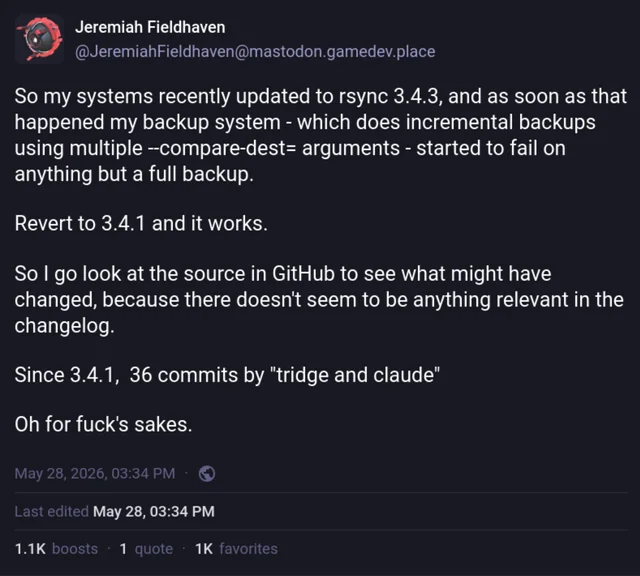
Microsoft Windows is probably the best example of this. Instead of actually improving the OS or fixing bugs, they’re busy cramming Copilot into Paint. It feels like software development is stalling just so companies can ship useless "features" to prove to shareholders that they're riding the current AI hype train.
It’s hitting infrastructure too. It looks like companies are relying on AI for their backends, and suddenly services like GitHub or AWS - which have worked perfectly for years - are having constant outages because some AI-generated tool messed up.
AI is ruining websites I want to visit
Websites need money to stay alive, usually through ads, donations, or subscriptions. But if everyone just asks an AI to scrape a site for them, those websites lose all their ad revenue. Eventually, they just won't exist anymore.
Because of this, websites are putting less effort into actual content and are just using AI to churn out more stuff instead. Then, AI models get trained on that AI-generated content - leading to "Model Collapse."
Big companies like OpenAI are making deals with massive publishers, but that only saves the "big guys." It doesn't do anything for the small bloggers or independent journalists.
To survive, more and more people are locking their content behind paywalls, which just makes the internet a much more closed-off place.
AI is ruining social media
Having to check every single post to see if it’s real or AI is getting more and more exhausting.
AI doesn't actually "think" - it just generates statistically plausible results, and it's getting better at it every day. If AI content becomes so flawless that we can't even spot the red flags anymore, that isn't a win. That’s the beginning of the end.
AI ruins web research
The Experiment: Making an AI-generated fake project
The Kurzgesagt team tried something interesting: they attempted to let AI tools create a video for them. The topic? “Why Brown Dwarfs are the worst stars and should be ashamed.”
The result was pretty funny, but also kind of scary. The AI was fast, sure, but it just started hallucinating facts left and right just to make the story "more exciting." It acted like a terrible journalist - basically just "confidently wrong" about everything.
The "Death of the Internet" (AKA AI Slop)
This is where it gets messy. When unverified, AI-generated garbage (what people call AI Slop) starts flooding the web, we hit a massive feedback loop:
- That fake Kurzgesagt video with all the made-up facts gets posted online.
- The next AI that scrapes the web for info on Brown Dwarfs finds that video.
- It treats that video as a "reliable source" and learns the fake info.
We’re looking at a future where the internet is so overwhelmed by low-quality, AI-generated content that finding actual, reliable information becomes a nightmare.
Manipulating the Machine
Then there's the weird side of this: people hiding invisible white text in documents to trick AI. If an AI reads it, it can be manipulated into giving a glowing review or ignoring massive mistakes. It’s basically poisoning digital libraries and databases, making them less and less reliable every day.
Is AI ruining my job?
Not yet. So far, I’m just much better at understanding the company's complex business logic. I’m also better at navigating niche German regulations and processes.
I use AI at work because at work I’m not coding for fun - I’m coding because I have to. Which brings us back to the topic of intention.
But AI can still be dangerous in its own way. I use it to generate tests, and they often end up being hundreds of lines of "mock bullshit" that just looks plausible. The pipeline turns green, it looks like my code is fully covered, so it must be correct, right? I’m happy, my boss is happy.
The problem is that these tests don't actually check if the code does what it's supposed to do in the context of the whole application. They only confirm that my code is the same code I wrote five minutes ago - regardless of whether it actually makes sense.
AI has made me lazy in this regard. If I accidentally introduce a bug at a critical point because I lazily replaced real test cases with "green pipeline bullshit" just to get a passing build, people could die.
AI is ruining the planet I live on
AI feels weightless, like it’s just floating in the "cloud," but the physical toll it takes on the planet is actually massive. Behind every seamless chatbot interaction or viral AI image is a huge, expanding infrastructure of data centers that are quietly draining global resources.
The numbers are pretty wild: training a single large language model can emit as much carbon as five cars do over their entire lifetimes, and a single AI query can use up to ten times the electricity of a traditional Google search.
It’s not just the power, either. These endless rows of servers need millions of gallons of water every single day just to keep from overheating - which often drains resources in areas that are already struggling with water scarcity.
As tech giants race to build even more powerful models, the massive demand for fossil fuels, intensive cooling, and rare-earth mining is turning this "digital revolution" into a real ecological crisis.
Good uses for AI
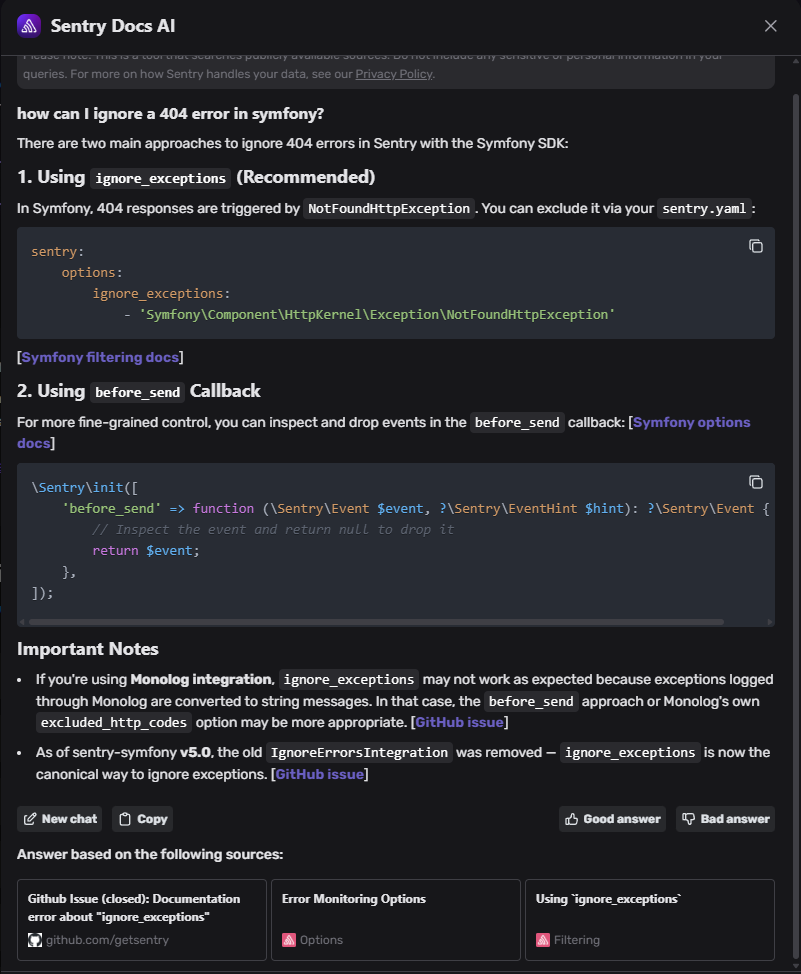
Apart from the things I listed under "How I use local LLMs" I’m a big fan of the kapa.ai feature in for example the Sentry Docs. You ask a question and get a pretty solid answer based on the documentation and the project's GitHub issues.
It doesn't always give you a 100% perfect solution, but it gives you enough context that you can actually find the answer in the docs or the issues yourself without a massive headache.
Final thoughts
At the end of the day, we have to learn how to handle AI, understanding exactly where it shines and where it fails.
The Pragmatic View (AI as a Tool): Like past shifts in technology - such as the transition from rigid Assembly language to abstract high-level programming - every new tool faces initial resistance and skepticism. From this perspective, progress requires us to learn how to manage the tool, understand its strengths and weaknesses, and adapt rather than demonize it.
The Existential View (AI as a Threat to the Soul): Unlike traditional inventions that merely automated manual labor to elevate human life, Generative AI targets the core of what makes us human. Because it mimics the deeply emotional, ethical, and soulful act of artistic creation, outsourcing this process to a machine risks eroding the very essence of human expression.